Work · rrm-designs (own product)
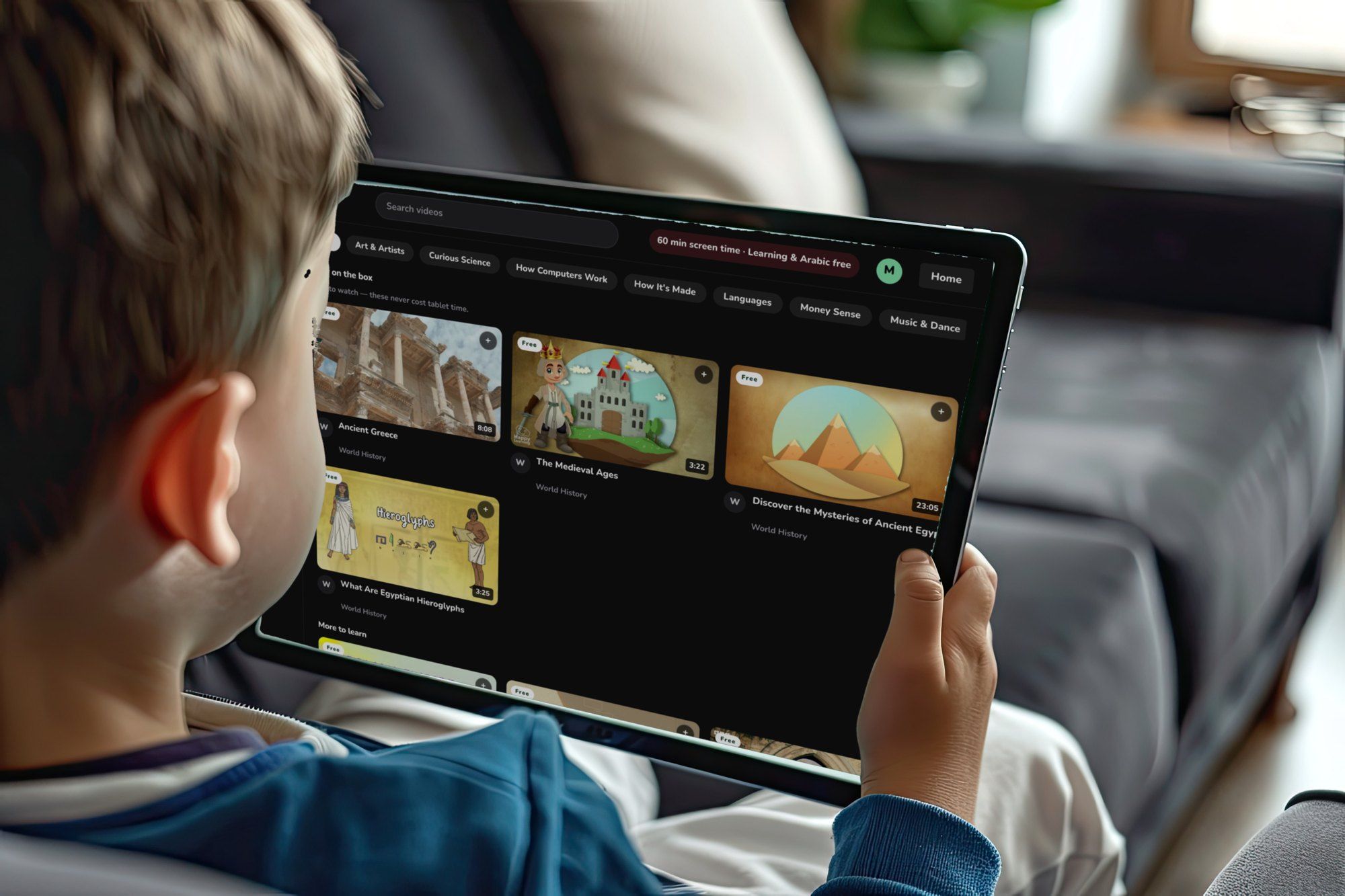
Netbox, an offline internet for children
A small computer in the cupboard that gives children films, videos, games, Arabic lessons and an encyclopedia on their tablets, with no internet and no accounts.
- Client
- rrm-designs (own product)
- My role
- Everything: product, design system, interface and the home server
The brief
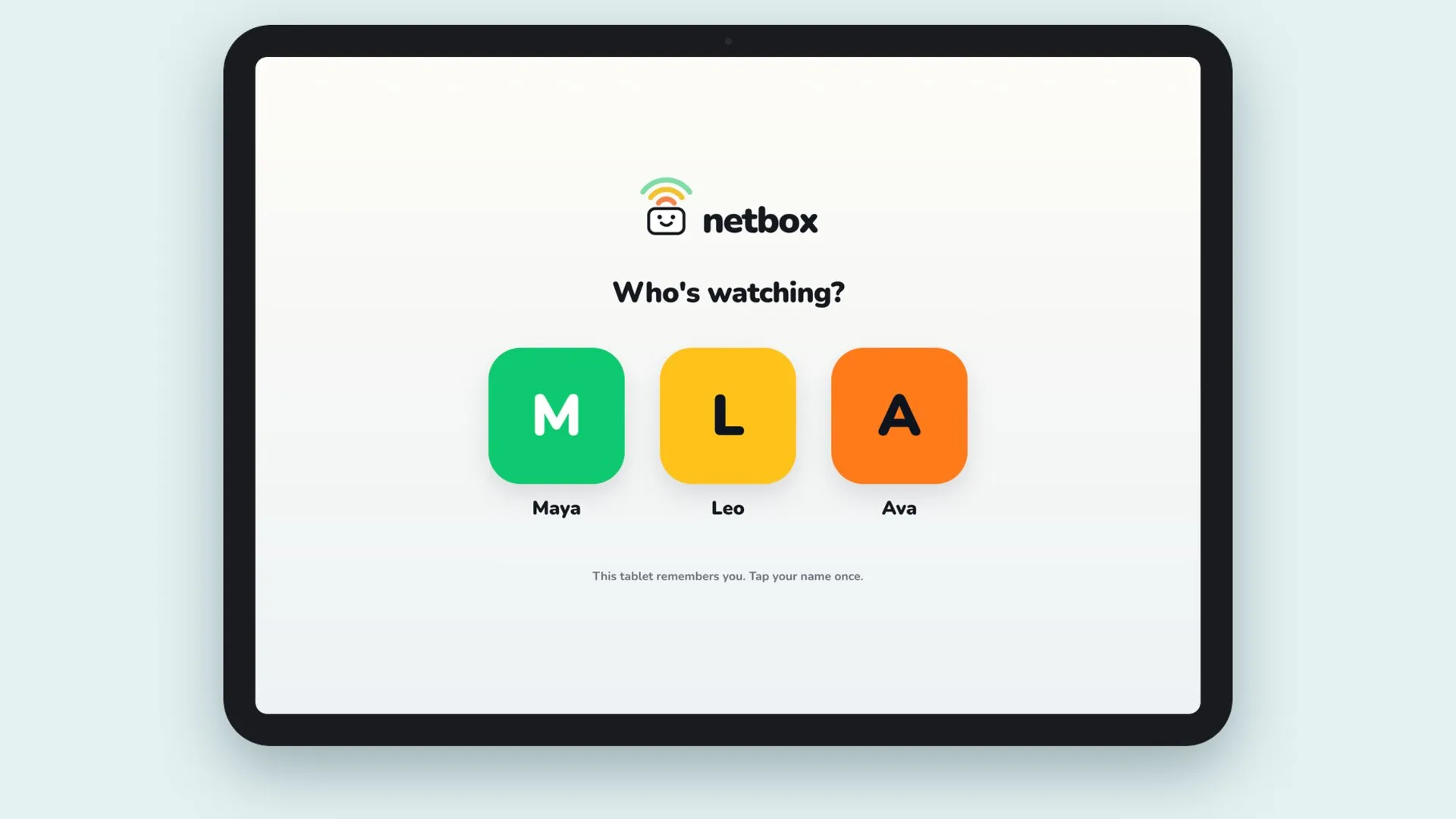
I built Netbox for children in my family. I wanted them to have the good parts of the internet (films, videos, games, somewhere to look things up) without the feeds, the autoplay and the open web. Everything lives on one small computer at home. The tablets reach it over the home Wi-Fi, there’s no internet connection, and nobody signs up for anything. A tablet is claimed once by a child’s name and stays theirs.
What I did
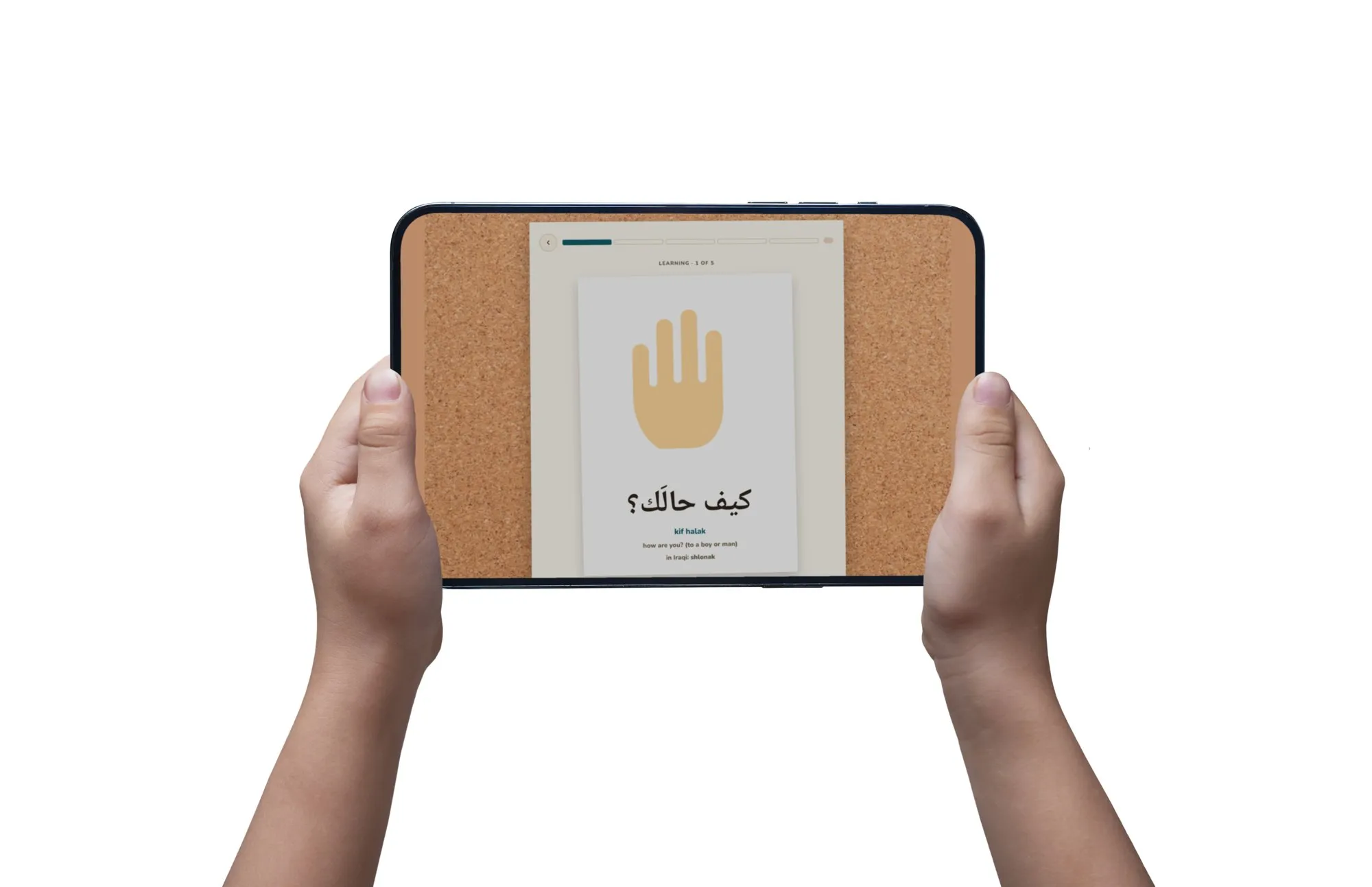
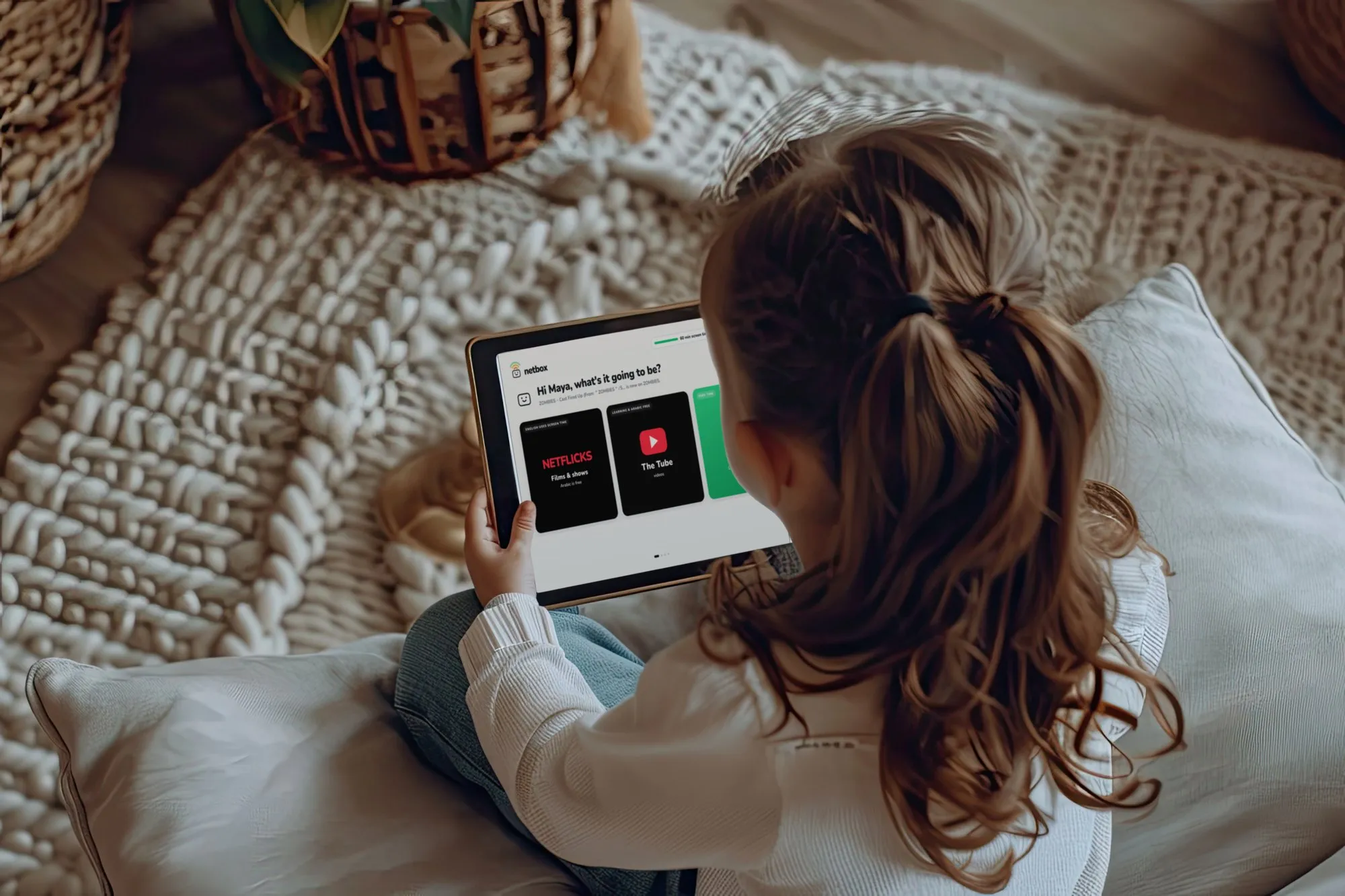
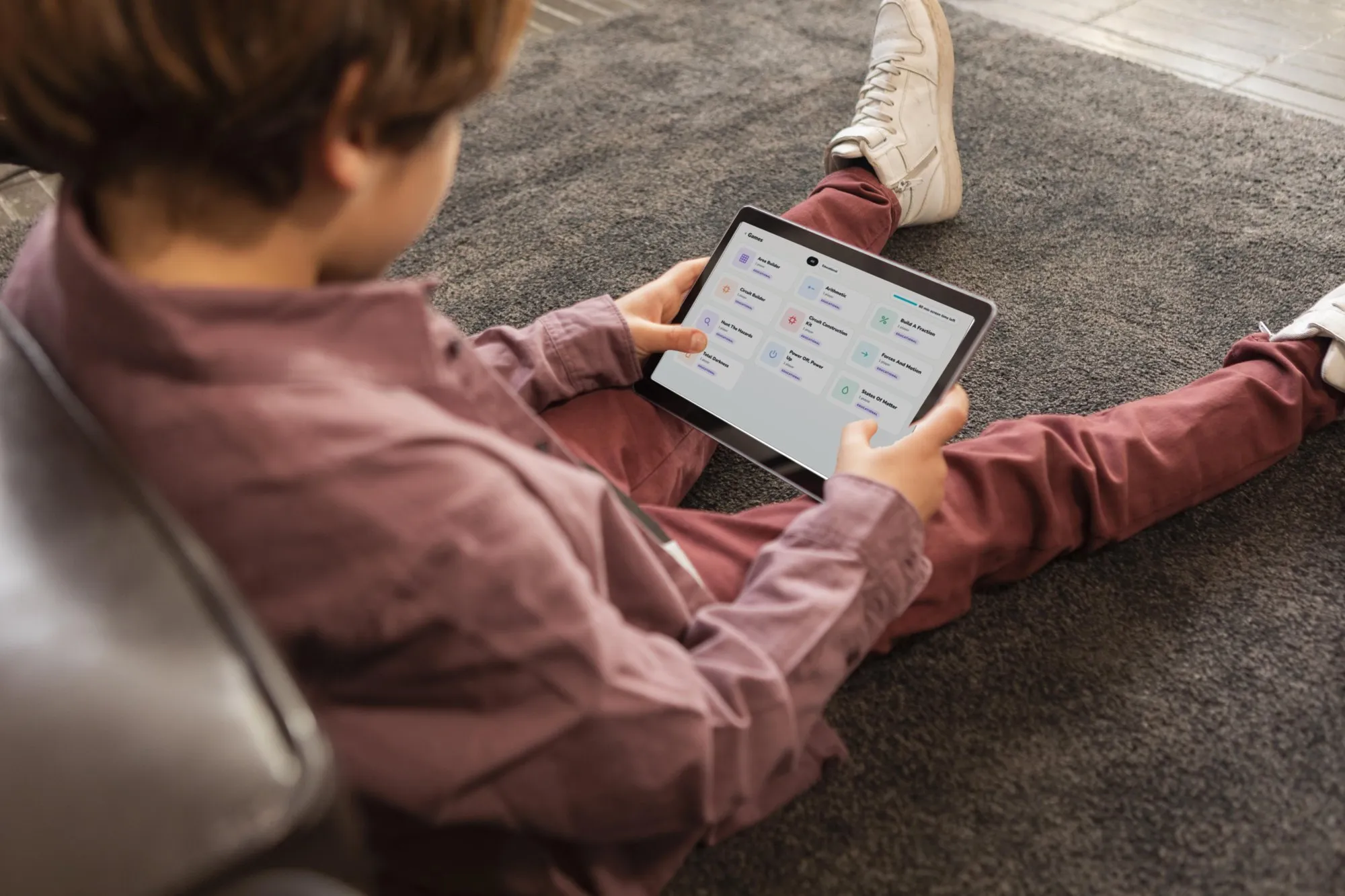
I designed and built all of it: the product, a small design system, the interface and the server. Each section works like something the children already know. There’s a films and shows room in English and Arabic, a videos room, Arabic lessons, games, a family feed and photo wall, and a friendly robot called Nunito who answers questions and helps with homework. Parents can read every chat.
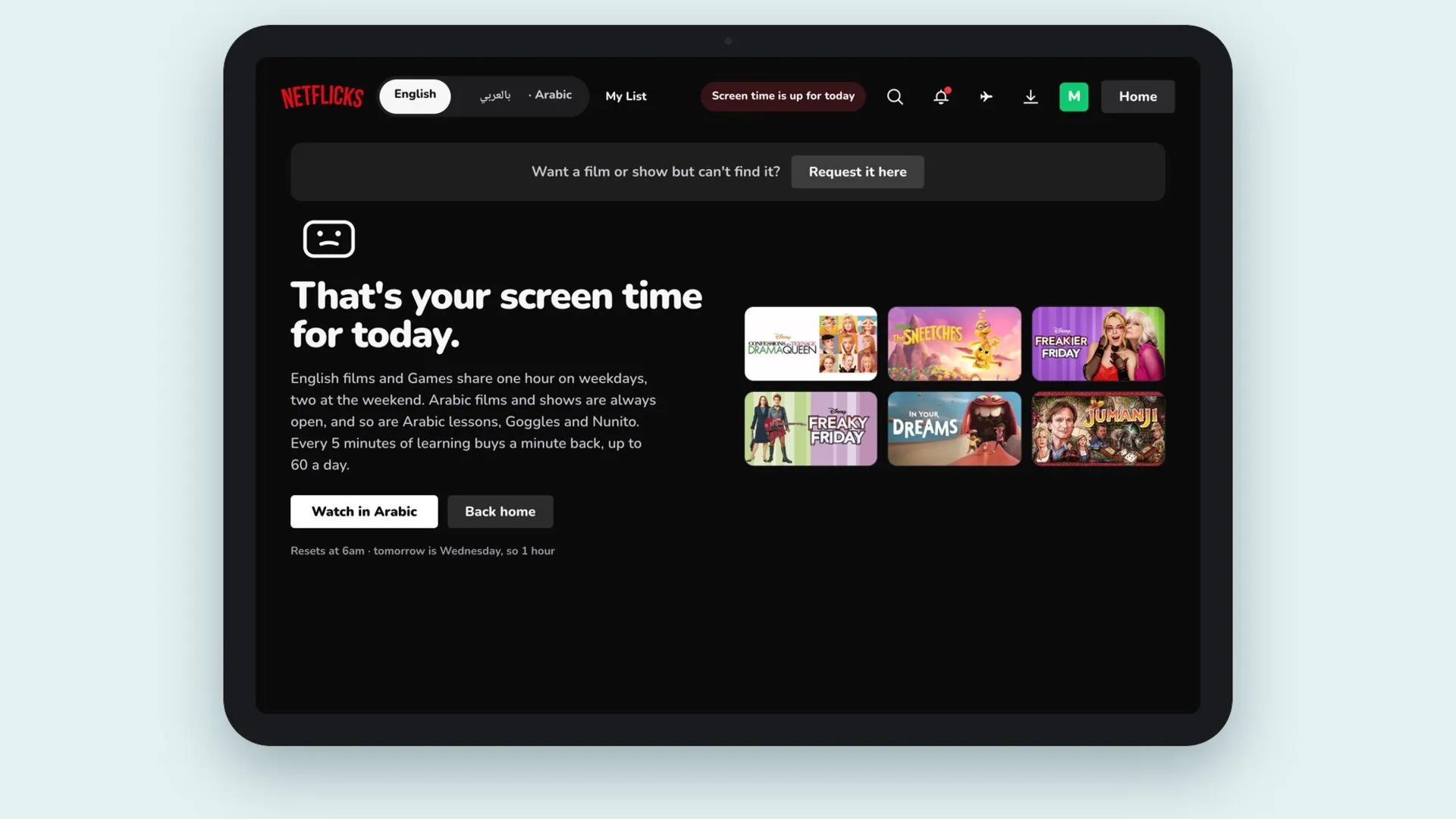
Screen time is one shared daily allowance, longer at weekends, and the server enforces it rather than the tablet. When it runs out, the films room says so and points to what’s still open. Arabic, learning and the encyclopedia never count towards it.
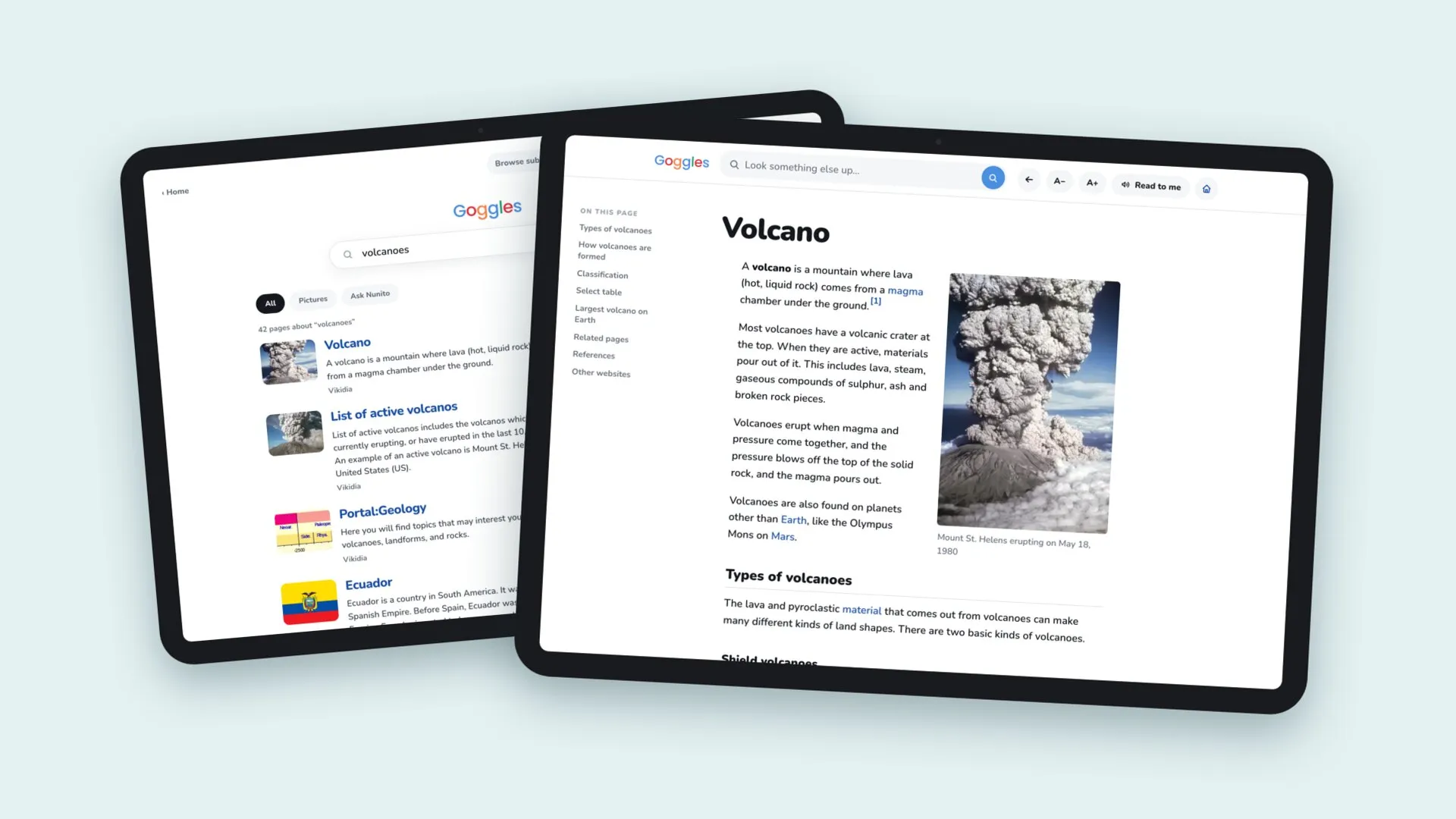
Goggles is the encyclopedia: 42,000 articles, searchable with no internet, with a simple and a full reading level on every page. The Tube is the videos room, with no feed, no autoplay and no recommendations. A channel is a folder a parent fills.
The type is Nunito throughout with Noto Naskh Arabic alongside it, line icons instead of emoji, and a colour for each child.
Outcome
Netbox is built to run on a Raspberry Pi 5, a computer about the size of a pack of cards. It makes its own Wi-Fi network, so it can sit in a cupboard in a 3D-printed case and look after itself. I’m testing it on a Mac for now, and it moves onto the Pi next.